 Add to Chrome
 Add to Firefox
 Add to Edge
GABI: Geometry-Aware Boundary Integration for Spacecraft Segmentation
May 30, 2026
Accurate segmentation is crucial for autonomous spacecraft, as it directly affects downstream tasks related to 3D situational awareness. The harsh illumination conditions of space, however, produce images with high variability in appearance, hindering the generalization of segmentation approaches across different spacecraft and environments. In this work, we propose GABI, a lightweight boundary-aware multi-task segmentation architecture that augments a convolutional backbone with an auxiliary distance-field prediction head. The distance field provides dense geometric supervision around object boundaries, encouraging the network to learn spatially consistent representations of spacecraft structures while maintaining low model complexity suitable for onboard perception systems. We evaluated GABI against both an established convolutional baseline and a heavier transformer-based architecture. On the SPARK benchmark, distance-field supervision improves the baseline by up to $5\%$ in Average Precision while achieving performance comparable to the transformer models. In generalization experiments, GABI improves Average Precision by more than $50\%$ over the baseline. In cross-domain evaluation, the lightweight GABI variant performs within $5\%$ in IoU and F1-score of the heavier transformer model while being approximately ten times smaller. At the same time, the heavier GABI variant surpasses the transformer architectures while remaining nearly three times lighter.

Uncertainty-driven 3D Gaussian Splatting Active Mapping via Anisotropic Visibility Field
May 28, 2026We present Gaussian Splatting Anisotropic Visibility Field (GAVIS), a novel framework for uncertainty quantification and active mapping in 3DGS. Our key insight is that regions unseen from the training views yield unreliable predictions from the 3DGS. To address this, we introduce a principled and efficient method for quantifying the visibility field in 3DGS, defined as the anisotropic visibility of each particle with respect to the training views, and represented using spherical harmonics. The resulting visibility field is integrated into a Bayesian Network-based uncertainty-aware 3DGS rasterizer, enabling real-time (200 FPS) uncertainty quantification for synthesized views. Active mapping is further performed within a maximum information gain framework building on this formulation. Extensive experiments across diverse environments demonstrate that GAVIS consistently and significantly outperforms prior approaches in both accuracy and efficiency. Moreover, beyond standalone use, our method can be applied post-hoc to improve the performance of existing approaches.
Collaborative Navigation and Exploration with $β$-Sparse Gaussian Processes
May 25, 2026Collaborative navigation of heterogeneous robots in unknown environments poses significant challenges due to sensing, communication, and computational limitations. In this work, a lead robot navigates toward a target while a mobile sensor robot (e.g., a drone) assists by transmitting information about its locally observed environment under bandwidth constraints. We propose a framework that enables the sensor to jointly select its transmitted map points and navigation actions online, while also predicting unexplored regions of the environment. To this end, we present $β$-Sparse Gaussian Processes, a novel and robust variational sparse Gaussian Process model for task-aware inducing point selection. Furthermore, we develop an action-selection strategy that balances task relevance with exploration. Simulations on Mars and Earth maps show that the framework can reduce path cost by 18% relative to no communication and decrease transmitted information by 76% compared to raw-data transmission baselines.
Lifted Schrödinger Bridges for Gaussian Mixture Endpoints: Projection Gaps and Path-Space Obstructions
May 24, 2026We study stochastic density control between Gaussian-mixture endpoint distributions under Brownian prior dynamics. Since the direct Schrödinger bridge between Gaussian mixtures is generally not available in closed form, we introduce a lifted path-space construction in which each trajectory is augmented with a source--target component label. Consequently, the problem decomposes into Gaussian component-to-component Schrödinger bridges with explicit marginal, drift, and cost formulas, while the mixture-level assignment reduces to a finite-dimensional entropic coupling problem with a Sinkhorn scaling form. We then analyze the projection obtained by discarding or forgetting the label. By construction, the projected law satisfies the original Gaussian-mixture endpoint constraints, but its relative entropy generally differs from the lifted relative entropy by a nonnegative conditional label-information gap. This gap reveals a path-space obstruction: the lifted optimizer cannot, in general, be identified with the direct unlabeled Schrödinger bridge after projection. We also derive the posterior-averaged Markov drift associated with the projected marginal flow, prove a kinetic-energy upper bound, and identify a common path-potential condition under which the projection gap vanishes. Several numerical illustrations showing density and shape control are recorded for a self-contained exposition.
Distributed Event-Triggered Distance-Based Formation Control for Multi-Agent Systems
Sep 15, 2025This paper addresses the problem of collaborative formation control for multi-agent systems with limited resources. We consider a team of robots tasked with achieving a desired formation from arbitrary initial configurations. To reduce unnecessary control updates and conserve resources, we propose a distributed event-triggered formation controller that relies on inter-agent distance measurements. Control updates are triggered only when the measurement error exceeds a predefined threshold, ensuring system stability. The proposed controller is validated through extensive simulations and real-world experiments involving different formations, communication topologies, scalability tests, and variations in design parameters, while also being compared against periodic triggering strategies. Results demonstrate that the event-triggered approach significantly reduces control efforts while preserving formation performance.
Delayed Expansion AGT: Kinodynamic Planning with Application to Tractor-Trailer Parking
Jun 16, 2025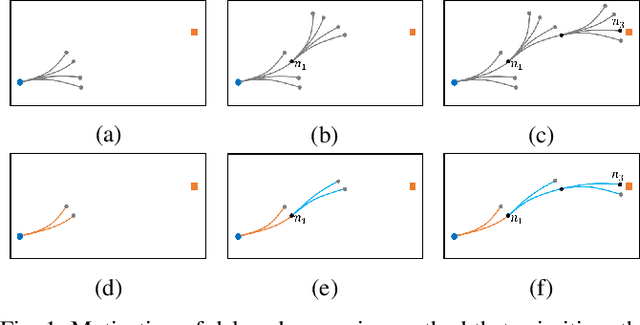
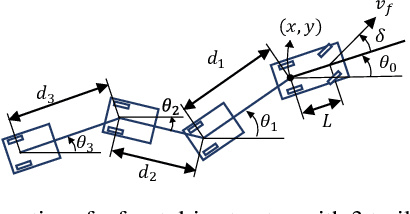
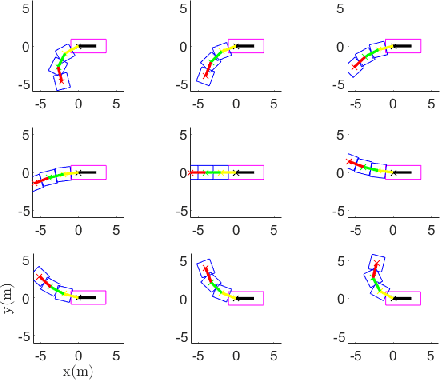
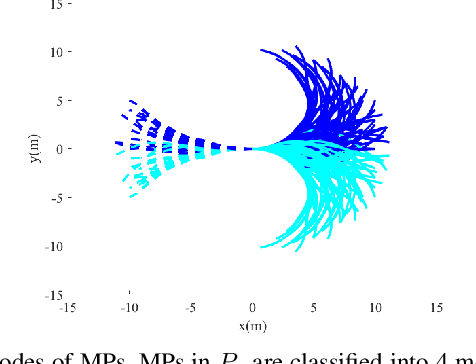
Kinodynamic planning of articulated vehicles in cluttered environments faces additional challenges arising from high-dimensional state space and complex system dynamics. Built upon [1],[2], this work proposes the DE-AGT algorithm that grows a tree using pre-computed motion primitives (MPs) and A* heuristics. The first feature of DE-AGT is a delayed expansion of MPs. In particular, the MPs are divided into different modes, which are ranked online. With the MP classification and prioritization, DE-AGT expands the most promising mode of MPs first, which eliminates unnecessary computation and finds solutions faster. To obtain the cost-to-go heuristic for nonholonomic articulated vehicles, we rely on supervised learning and train neural networks for fast and accurate cost-to-go prediction. The learned heuristic is used for online mode ranking and node selection. Another feature of DE-AGT is the improved goal-reaching. Exactly reaching a goal state usually requires a constant connection checking with the goal by solving steering problems -- non-trivial and time-consuming for articulated vehicles. The proposed termination scheme overcomes this challenge by tightly integrating a light-weight trajectory tracking controller with the search process. DE-AGT is implemented for autonomous parking of a general car-like tractor with 3-trailer. Simulation results show an average of 10x acceleration compared to a previous method.
HCOA*: Hierarchical Class-ordered A* for Navigation in Semantic Environments
May 06, 2025This paper addresses the problem of robot navigation in mixed geometric and semantic 3D environments. Given a hierarchical representation of the environment, the objective is to navigate from a start position to a goal while minimizing the computational cost. We introduce Hierarchical Class-ordered A* (HCOA*), an algorithm that leverages the environmental hierarchy for efficient path-planning in semantic graphs, significantly reducing computational effort. We use a total order over the semantic classes and prove theoretical performance guarantees for the algorithm. We propose two approaches for higher-layer node classification based on the node semantics of the lowest layer: a Graph Neural Network-based method and a Majority-Class method. We evaluate our approach through simulations on a 3D Scene Graph (3DSG), comparing it to the state-of-the-art and assessing its performance against our classification approaches. Results show that HCOA* can find the optimal path while reducing the number of expanded nodes by 25% and achieving a 16% reduction in computational time on the uHumans2 3DSG dataset.
Stereophotoclinometry Revisited
Apr 11, 2025


Image-based surface reconstruction and characterization is crucial for missions to small celestial bodies, as it informs mission planning, navigation, and scientific analysis. However, current state-of-the-practice methods, such as stereophotoclinometry (SPC), rely heavily on human-in-the-loop verification and high-fidelity a priori information. This paper proposes Photoclinometry-from-Motion (PhoMo), a novel framework that incorporates photoclinometry techniques into a keypoint-based structure-from-motion (SfM) system to estimate the surface normal and albedo at detected landmarks to improve autonomous surface and shape characterization of small celestial bodies from in-situ imagery. In contrast to SPC, we forego the expensive maplet estimation step and instead use dense keypoint measurements and correspondences from an autonomous keypoint detection and matching method based on deep learning. Moreover, we develop a factor graph-based approach allowing for simultaneous optimization of the spacecraft's pose, landmark positions, Sun-relative direction, and surface normals and albedos via fusion of Sun vector measurements and image keypoint measurements. The proposed framework is validated on real imagery taken by the Dawn mission to the asteroid 4 Vesta and the minor planet 1 Ceres and compared against an SPC reconstruction, where we demonstrate superior rendering performance compared to an SPC solution and precise alignment to a stereophotogrammetry (SPG) solution without relying on any a priori camera pose and topography information or humans-in-the-loop.
Steering Large Agent Populations using Mean-Field Schrodinger Bridges with Gaussian Mixture Models
Mar 31, 2025The Mean-Field Schrodinger Bridge (MFSB) problem is an optimization problem aiming to find the minimum effort control policy to drive a McKean-Vlassov stochastic differential equation from one probability measure to another. In the context of multiagent control, the objective is to control the configuration of a swarm of identical, interacting cooperative agents, as captured by the time-varying probability measure of their state. Available methods for solving this problem for distributions with continuous support rely either on spatial discretizations of the problem's domain or on approximating optimal solutions using neural networks trained through stochastic optimization schemes. For agents following Linear Time-Varying dynamics, and for Gaussian Mixture Model boundary distributions, we propose a highly efficient parameterization to approximate the solutions of the corresponding MFSB in closed form, without any learning steps. Our proposed approach consists of a mixture of elementary policies, each solving a Gaussian-to-Gaussian Covariance Steering problem from the components of the initial to the components of the terminal mixture. Leveraging the semidefinite formulation of the Covariance Steering problem, our proposed solver can handle probabilistic hard constraints on the system's state, while maintaining numerical tractability. We illustrate our approach on a variety of numerical examples.
Communication-Aware Iterative Map Compression for Online Path-Planning
Mar 13, 2025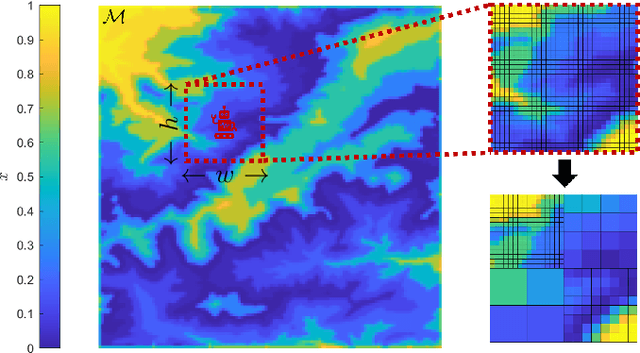
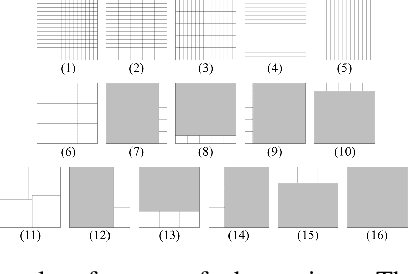
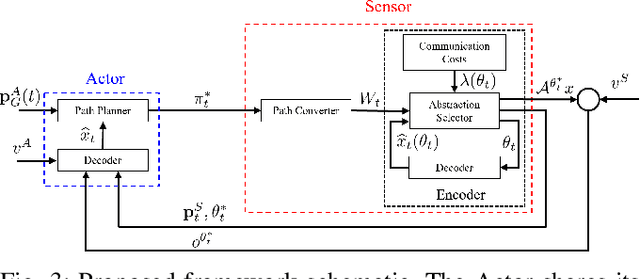
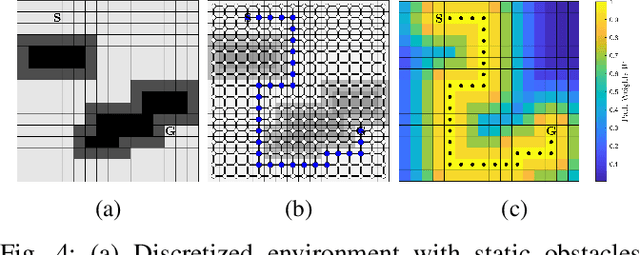
This paper addresses the problem of optimizing communicated information among heterogeneous, resource-aware robot teams to facilitate their navigation. In such operations, a mobile robot compresses its local map to assist another robot in reaching a target within an uncharted environment. The primary challenge lies in ensuring that the map compression step balances network load while transmitting only the most essential information for effective navigation. We propose a communication framework that sequentially selects the optimal map compression in a task-driven, communication-aware manner. It introduces a decoder capable of iterative map estimation, handling noise through Kalman filter techniques. The computational speed of our decoder allows for a larger compression template set compared to previous methods, and enables applications in more challenging environments. Specifically, our simulations demonstrate a remarkable 98% reduction in communicated information, compared to a framework that transmits the raw data, on a large Mars inclination map and an Earth map, all while maintaining similar planning costs. Furthermore, our method significantly reduces computational time compared to the state-of-the-art approach.